May 23, 2026 - Dissecting the Reform Party Surge Following the 2026 Local UK Elections
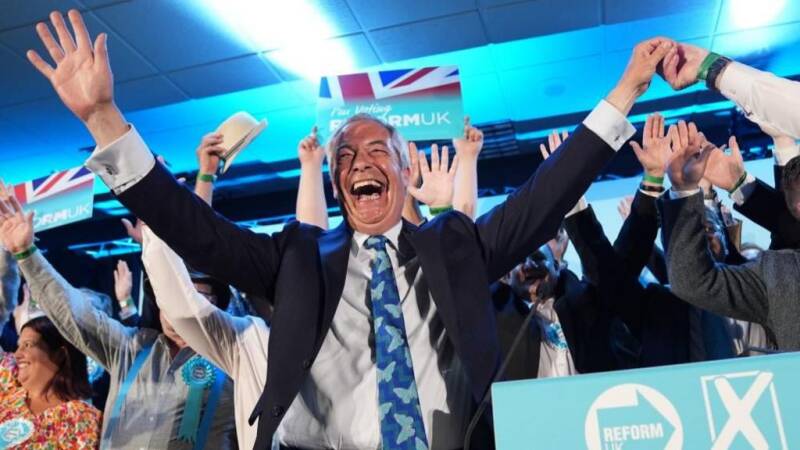
Reform UK has picked up to 1450 council seats following the 2026 local UK elections. Local elections are usually a reliable predictor of general election results. As it stands, Reform UK has a realistic possibility of winning the next general election in the UK. Various scholars have speculated on what this means for the future of UK politics.
As Ben Quinn has found “Nigel Farage hailed sweeping election wins for Reform UK as a “historic shift in British politics” on a day when the populist party made gains at the expense of Labour and the Conservatives. Reform made advances in heartland areas of both parties, clocking up substantial early results in the English local elections by taking control of Essex county council, Havering – its first London local authority – and Sunderland city council. However, the results were not without setbacks, for example in Harlow, a past general election bellwether, while one prominent pollster suggested the party may have peaked and that Farage would have reason to be “privately worried”. Nevertheless, Reform established beachheads for the next general election in areas including Essex, home to the seats of prominent Tory MPs including Kemi Badenoch and James Cleverly, where Farage’s party went from having a single representative to taking control of the council.” (The Guardian.2026) As Quinn found, Nigel Farage celebrated major local election gains for Reform UK, calling them a “historic shift in British politics” after the party took control of councils including Essex County Council, Havering, and Sunderland. The party’s success came at the expense of both the Labour Party and the Conservative Party, especially in key Conservative areas linked to senior MPs like Kemi Badenoch and James Cleverly. Despite some setbacks in places like Harlow and warnings from pollsters that Reform may have reached its peak, the results suggest the party is becoming a serious force ahead of the next general election.
The Reform UK surge has demonstrated the rising trend of populism in Europe. As Alec Smith argues “last week’s local election results showed a sharp change in British politics. The two-party dominance of Labour and Conservative was shaken, with major gains being made by both the Greens and Reform UK – parties described as ‘populist’ within British media, as well as by politicians. This is not a phenomenon unique to the United Kingdom (UK). Across Europe, populist parties have seen a surge in support, such as Alternative for Germany (Alternative für Deutschland; AfD), Brothers of Italy (Fratelli d’Italia; FdI), and Law and Justice (Prawo i Sprawiedliwość; PiS) in Poland. While not a unanimous shift, as demonstrated by the April 2026 election of Péter Magyar as Prime Minister of Hungary, the continental trend towards populism nevertheless remains clear … The rise of populism in Europe takes different forms and presents different challenges for the UK. For example, sovereigntist-nationalist parties like AfD are broadly Eurosceptic, ‘Make America Great Again’ (MAGA)-aligned, Kremlin-leaning, and inclined to fracture European Union (EU) cohesion, including on Ukraine. Illiberal conservatives like PiS are also Eurosceptic and MAGA-aligned, but have a hardline stance on Russia and have adopted a more Atlanticist tradition – but with support for Ukraine more qualified and conditional. Nativist statists like the RN in France have tried to distance themselves from MAGA, but cannot be relied upon when it comes to an enduring commitment to the North Atlantic Treaty Organisation (NATO) and support for Ukraine. And these are just the populists on the right wing … None of these parties are in power yet, but with a presidential ballot in France and parliamentary elections in Poland (where a PiS-supported candidate won the presidency last year) both scheduled for next year, there is a chance that this might change. Germany’s fragile coalition government might also collapse before its full term is up in 2029.“ (Britain's World.2026) As Smith has asserted, recent local election results in the UK reflected a wider European trend of rising support for populist parties, with gains by Reform UK and the Greens weakening the traditional dominance of the Labour Party and Conservative Party. Similar movements across Europe, including Alternative for Germany, Brothers of Italy, and Law and Justice, differ in ideology but often share Eurosceptic, nationalist, or anti-establishment views that could challenge European unity, NATO, and support for Ukraine. Although many of these parties are not currently in power, upcoming elections in countries like France and Poland, along with instability in Germany, could further strengthen populist influence across Europe.
The 2026 local elections have revealed a significant transformation in British politics, with Reform UK emerging as a serious challenger to the long-standing dominance of the Labour Party and Conservative Party. The party’s rapid rise reflects a broader European trend of growing populist support, driven by dissatisfaction with traditional political institutions and increasing nationalist and anti-establishment sentiment. While it remains uncertain whether Reform UK can sustain its momentum through to the next general election, its electoral success has already reshaped political debate in the UK and signalled the potential for major changes across Europe in the coming years.