March 23, 2026 - Dissecting The Emerging U.S.–Cuba Confrontation
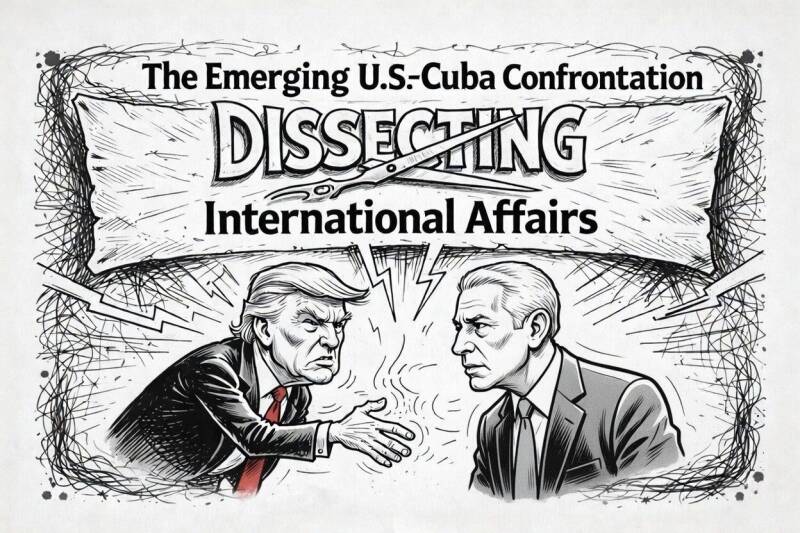
In recent weeks, U.S. President Donald Trump has been threatening Cuba with military action. Amidst these threats, the Cuban leadership has been resolute, despite mounting infrastructural pressure following U.S. oil blockades on the island nation.
As Nicole Jao has found, “Havana and Washington entered talks earlier this month as an oil blockade pushes the nation deeper into economic crisis … Cuba’s Deputy Foreign Minister Carlos Fernandez de Cossio declared over the weekend that the nation stands prepared for a military engagement with the U.S., directly responding to Donald Trump’s threats to take over the Caribbean island. Trump escalated his rhetoric on Monday, stating he expected to have the "honor" of taking Cuba This comes as an oil blockade he imposed pushes the Communist-run nation deeper into economic crisis, despite Havana and Washington entering talks earlier this month … Reports had previously suggested the Trump administration was seeking to remove Cuban President Miguel Diaz-Canel from power … Cuba also initiated efforts to restore its national energy system on Sunday, a day after a complete grid collapse left millions without power for the third time this month. The island nation is grappling with an unprecedented energy crisis. While its aging infrastructure has significantly deteriorated in recent years, the government also attributes the widespread outages to a U.S. energy blockade.” (The Independent.2026) As Jao has found, talks between Cuba and the United States are ongoing, however, tensions are rising as an oil blockade worsens Cuba’s economic and energy crisis. Donald Trump has intensified disturbing rhetoric about taking control of the island, prompting Cuba to signal its readiness for military conflict. Meanwhile, widespread power outages and a collapsing energy system are deepening the crisis, which Cuban officials blame in part on U.S. actions.
Various reports from Washington suggest Trump’s eye is already shifting towards Cuba. As Vivian Salamanca and Sarah Fitzpatrick note,“The Trump Administration is pushing Cuba toward crisis, seeking leverage to install more compliant leadership in Havana. Donald Trump said he expects the “honor of taking Cuba… ‘Whether I free it, take it… I can do anything I want…’.” Economic collapse, blackouts, and mass emigration have weakened the government of Miguel Díaz-Canel, which has begun reforms and talks with Washington. Officials suggest negotiations may mirror failed efforts in Venezuela and Iran, potentially leading to intervention. Legal groundwork is underway, including indictments against Cuban leaders, while some insiders claim “regime change is lined up.” However, the goal may be economic access rather than democracy—“There’s billions of dollars to be made…” Cuba faces severe shortages, with the United Nations warning of possible “collapse.” The U.S. State Department said the island “has plunged into extreme poverty and darkness… the tragic result…” of decades of communism. Trump’s vision emphasizes business expansion—“We control our hemisphere… we’re going to set up the business community…”—with potential cooperation from figures like Marci Rubio. Talks focus on leadership change and economic opening, though they may serve as cover for force. Meanwhile, geopolitical tensions rise as Russia tests U.S. resolve, raising fears that “this is the showdown.” (The Atlantic.2026) As the authors have found, the current situation suggests that Trump is using economic collapse in Cuba not just as pressure, but as a deliberate strategy to force a controlled political and economic realignment favorable to U.S. interests, rather than genuine regime transformation. Negotiations appear less about diplomacy and more of a staged pathway to intervention, where legal, economic, and military tools are being aligned in advance. The U.S. foreign policy approach echoes patterns seen in Venezuela.
Ultimately, the current crisis reflects a shift toward transactional geopolitics, where humanitarian distress becomes leverage and sovereignty is secondary to market access and strategic dominance. The U.S. risks alienating regional allies in Latin America and the Caribbean, many of whom remain deeply sensitive to historical patterns of American interventionism. Moreover, the U.S. is undermining its global credibility by prioritising economic opportunism over international law and diplomatic norms.